Buying Guides
Best Sex Toys & Kits for Couples: A Beginner's Guide to Intimate Play Together
2 May 2026 · 9 min read
The couples toys category sounds straightforward—a toy that works for two people. In practice, most toys marketed as "couples toys" are designed for one person with secondary features for a partner, not for mutual use. A "couples vibrator" might be a toy that has an external arm for clitoral stimulation during penetration with a partner, but that's not the same as a toy where both people are simultaneously stimulated. Understanding the difference between "designed for couples" and "designed for use by one person during partnered sex" is the foundation of choosing correctly.
This guide covers the actual couples toy categories, what each type offers, common mistakes, and communication approaches that matter more than the toy itself.
What "Couples Toy" Actually Means
A couples toy can mean one of several things:
-
One person wears it during partnered sex, and a partner controls or benefits from it. Example: a vibrator with an external arm held in place against the vulva during penetration.
-
Both people are simultaneously inserted with the same toy. Example: a double-ended dildo, with one end in each partner.
-
A toy kit designed for partnered exploration. Example: a set containing items for different preferences and scenarios.
-
A toy designed for one person that a partner can interact with. Example: a vibrator that a partner can hold and control during partnered sex.
-
Long-distance couples toys. Remote-controlled vibrators where one partner controls from elsewhere.
Each category has different dimension requirements and different communication patterns.
The Communication Piece (This Matters More Than the Toy)
Before choosing a toy, couples need to discuss:
Comfort level: Is this the first toy? Is someone nervous? That anxiety shapes what will and won't work. A toy that's "perfect" is useless if someone isn't actually comfortable with it.
Preference: Do both partners want the same things, or different things? Some couples want simultaneous pleasure; others prefer one person being stimulated while the other watches or participates differently.
Anatomy: Do dimensions matter equally for both? Often no. One partner might be comfortable with something that would be too large for the other. Where do you compromise?
Control and pacing: Who leads? Do you take turns controlling the toy, or does one person drive while the other provides input?
This conversation is harder than picking a toy, but it's where most couples toys succeed or fail. A mediocre toy with good communication beats an "perfect" toy with no communication.
Couples Toy Types
U-Shaped Vibrators (Partner During Penetration)
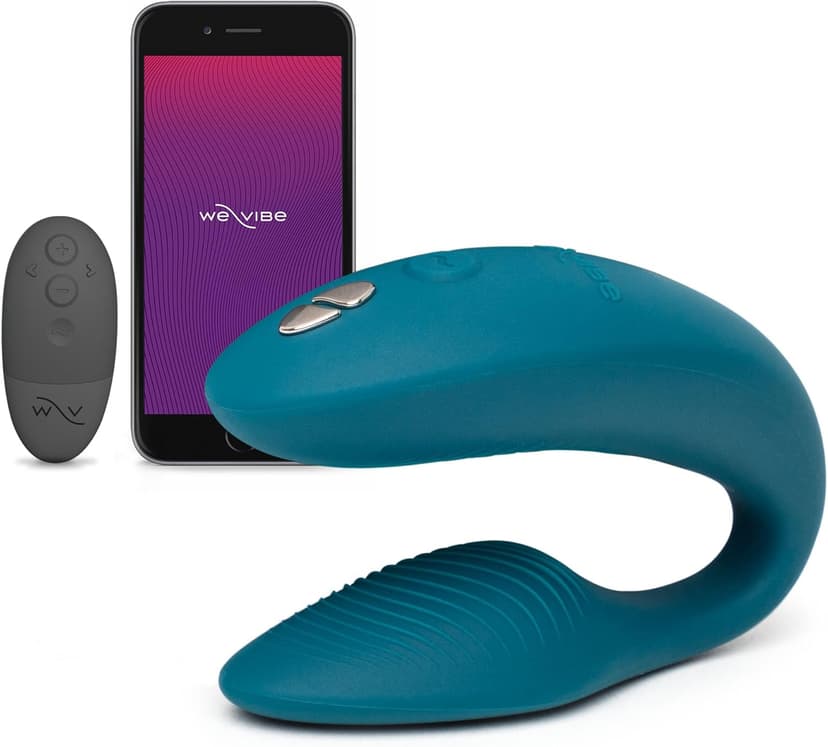
These are designed specifically for one partner to wear during penetration, usually in a vagina, with an external arm stimulating the vulva. Common brands include We-Vibe Chorus, Lelo Tara, and various generic versions.
How they work: One arm inserts into the vagina. A second arm rests against the vulva, stimulating the clitoris or general vulvar area. During penetrative sex, the inserted partner's movements create subtle vibration.
What dimensions matter:
-
Internal arm width: Should be narrow enough (2.5–3cm diameter) that it doesn't interfere with penetration but wide enough to stay in place. Too narrow and it shifts during sex; too wide and it gets in the way.
-
External arm positioning: The distance between the arms is crucial. If the arms are too close together, the external arm doesn't hit the right spot. If too far apart, it doesn't make contact. This varies enormously by individual anatomy.
-
Material: Always silicone, always rechargeable (battery is essential for multi-hour use without being tethered to a cord).
When to choose: You're both comfortable with insertion and want hands-free vibration for the receptive partner during partnered sex.
When to skip: One partner isn't comfortable with insertion. The receptive partner doesn't like anything internally during penetration. Either partner has specific anatomy where a u-shaped toy won't fit correctly.
Beginner model: We-Vibe Chorus. Internal arm 3.1cm, positioned specifically for couples use. 10 vibration patterns. 2-hour battery. Designed to stay in place during sex. Rechargeable. More expensive ($150+) but designed for actual couples use, not repurposed from single-partner design.
Budget option: Generic u-shaped vibrators ($40–$80). Shape is similar, but fit and stability vary. Quality is hit-or-miss; reviews matter.
Couples Vibrators (App-Controlled Remote)
These are wearable vibrators—often small, discreet vibrators meant to be worn internally or against the vulva—that one partner controls via app from a distance or close by.
How they work: One partner wears the toy. The other partner controls vibration patterns via a phone app. The controlling partner feels connected and engaged; the wearing partner gets stimulation from patterns they can't create themselves.
What dimensions matter:
-
Insertable size (if insertable): Most are small (4–7cm insertable length, 2–3cm diameter). Designed for discretion and ease of wear.
-
Battery life: 1–2 hours typical. Important for longer play sessions.
-
App range: Should work internationally if long-distance. Some apps have connection issues at range; check reviews.
When to choose: You like the idea of one partner controlling the other. Long-distance couples want to feel connected during intimate time. One partner enjoys foreplay control.
When to skip: Poor internet connection is a dealbreaker. Either partner has privacy concerns about app data or connection. You want something that doesn't require a phone in the room.
Beginner model: Lovense Lush 3. Insertable 6.8cm, diameter 2.5cm, 3-hour battery, app-controlled with long-range connectivity. Discreet, reliable. About $80.
Couples-specific model: We-Vibe Vector or Chorus (if remote control during partnered sex appeals). More expensive but designed with couples in mind.
Double-Ended Dildos (Mutual Insertion)
A single toy with two insertable ends, one for each partner. Less common than u-shaped vibrators but important for couples who want simultaneous insertion without penetration (two vulvas, or one vulva and one rectum).
How they work: One end goes in one partner, the other end goes in the other partner. Both partners are simultaneously penetrated by the same toy. Movement from either partner transmits sensation to the other.
What dimensions matter:
-
Total length: Critical. A 30cm dildo has about 12–13cm per partner usable—often too short. 35–45cm is realistic. Anything over 50cm is unwieldy.
-
Flexibility: Stiff dildos require partners to position precisely. Flexible dildos (Shore 0–10 hardness) adjust to partners' movements and are much more forgiving.
-
Diameter per person: If one partner is comfortable with 4cm and the other only with 3cm, the toy can't satisfy both. Compromise on the smaller person's limit.
-
Curve: Straight dildos work for some positions; curved ones accommodate different angles better.
When to choose: Both partners want simultaneous insertion. You want one object connecting you physically.
When to skip: One or both partners don't like shared objects. Coordination is too complicated. Dimensions don't align for both partners.
Example specs: 40cm total length, 3.5cm diameter, flexible silicone, curved for easier positioning. Both partners get about 16cm usable with the curve accounted for.
Note: Finding a double-ended dildo that works for both partners dimensionally is genuinely hard. The pool of options is smaller than single-partner toys. Check dimensions carefully.
Couples Toy Kits
Pre-assembled sets designed for couples exploration. These often contain a vibrator, a dildo, a couples vibrator (u-shaped or remote), massage oils, or other items.
When to choose: You're unsure where to start and want curated options. You want to explore multiple toy types in one purchase.
When to skip: You already know what you want (kits often include items you won't use). The kit price is marked up compared to buying separately.
What's usually in a kit: A vibrator, a dildo or couples vibrator, lube, condoms, sometimes positioning aids or massage oils.
Quality varies wildly. Some kits (from established brands like We-Vibe or Lelo) are genuinely useful. Others (cheap amazon kits) are assortments of low-quality toys. Read reviews by material and quality, not just "good kit."
Specific Scenarios
For Long-Distance Couples
Remote-controlled app vibrators (Lovense, We-Vibe with app control) or teledildonics (toys that respond to a partner's input from elsewhere). Important factors:
- App reliability (connection must work internationally and at range)
- Privacy/data security (you're trusting an app company with intimate data)
- Battery life (1–2 hours means you need planning)
For First-Time Couples Toy Use
Start small and simple:
- A basic couples vibrator kit (under $50) to explore without huge financial commitment.
- Something both partners already know they like (if one person loves vibration and the other loves insertion, find a toy that does both).
- Go smaller than you think you need on insertable dimensions. You can always upgrade; you can't downgrade after a purchase.
For Shy or Anxious Partners
- Start with external-only toys (vibrators that don't require insertion). Less vulnerable, less pressure.
- Let anxious partner control. If someone's nervous about a toy, let them drive—pace, intensity, when to use it. Control = safety.
- Small, discreet options. Some people feel less exposed with a small vibrator than a large, obvious toy.
For Simultaneous Stimulation During Partnered Sex
Partner A's perspective: Need a toy that works during penetration with Partner B. Partner B's perspective: Toy can't get in the way; ideally adds pleasure for me too.
Solution: u-shaped vibrator (Partner A wears it; Partner B benefits from the vibration during penetration). Or a couples vibrator that Partner A controls while Partner B penetrates.
Size and Fit: The Dimension Chart
Unlike single-person toys, couples toys have TWO sets of dimension requirements:
| Scenario | Partner A Preference | Partner B Preference | Compromise | |----------|---------------------|---------------------|-----------| | Both comfortable with 4cm diameter | 4cm | 4cm | 4cm (easy) | | A comfortable with 4cm, B only with 3.5cm | 4cm | 3.5cm | 3.5cm (B's limit wins) | | A wants 5cm, B wants 3cm | 5cm | 3cm | 3.5cm (middle ground) or buy separate toys | | A wants insertable 15cm, B wants 10cm | 15cm | 10cm | 10–12cm (compromise or separate toys) |
Practical rule: The partner with the smaller preference determines the maximum. Pushing someone beyond their comfort is counterproductive.
Material and Safety (Couples-Specific)
If you're sharing a toy, material matters even more. You'll both be inserting it, potentially at different times or in the same session.
Only option: Platinum-cured silicone. It's the only material that's fully sterilizable between partners (boiling, dishwasher without detergent, or toy cleaner). TPE, jelly rubber, and uncertified silicone are porous and can transfer bacteria despite cleaning.
The Conversation Framework
Before buying:
- Comfort level: Is this a first toy? Is anyone nervous? Acknowledge it.
- Preference: What does each person want—insertion, vibration, observation, control, something else?
- Boundaries: What's off-limits? Communicate clearly.
- Anatomy: What dimensions work? Be specific.
- Control: Who initiates? Who controls pacing?
- Safety: Material, hygiene, what happens if someone wants to stop.
This takes 15 minutes and prevents most couples toy problems.
Common Mistakes
Buying too large without discussion. Person A buys a "couples vibrator" that's 4.5cm diameter without confirming Person B is comfortable with that. Person B doesn't use it. Money wasted.
Assuming one toy fits all preferences. Some couples think one "perfect" toy will satisfy both. Usually it doesn't. Be prepared to own multiple toys.
Not clarifying insertion vs. external use. One person thinks it's going to be inserted during sex; the other thinks it's external. Miscommunication leading to dissatisfaction.
Buying without checking material. Cheap jelly rubber "couples vibrators" are porous and unsafe for sharing.
Ignoring discomfort as "you'll adjust." If someone's uncomfortable, no toy is worth pushing. Comfort is non-negotiable.
Where to Start
First toy: A basic couples vibrator kit from an established brand ($30–$60). Low financial commitment, curated by someone who thinks about couples use.
After that: Either deepen within one category (upgrade to a higher-quality u-shaped vibrator) or explore a different type (try a double-ended dildo).
For reference: The Measured Pleasure couples toy filter shows vibrators, kits, and toys designed for couples use, sortable by dimension, material, and feature type.
For specific brand comparisons, see We-Vibe vs. Lelo couples vibrators comparison (coming soon).
Key Takeaway
The toy matters less than the communication. Start simple, discuss anatomy and preference, prioritize comfort over performance, and build from there. Most successful couples toys are second or third purchases once you both know what you like. The first one is about exploration, not perfection.