Buying Guides
Realistic Dildo Guide: What Makes One Actually Realistic
28 April 2026 · 7 min read
"Realistic" is one of the most-searched dildo terms in the category, and one of the least defined. It appears in product titles, in marketing copy, in search results — applied to products that range from genuinely anatomically careful sculpts in dual-density silicone to brightly-coloured TPE products with vague penile shaping. The word does a lot of work without much consistent meaning.
Realistic compared to what is the question that almost no listing answers. This guide treats realism as a set of specific spec features — texture, shape, dimensions, material — and walks through what each one means in practice. A genuinely realistic dildo is identifiable on the spec sheet before it's ever held; understanding which signals to look for is the difference between a realistic-marketed product and an actually realistic one.
What Realistic Means in Spec Terms
Four variables determine whether a product is realistic in any meaningful sense:
Texture — Skin-like surface feel, achieved through dual-density construction (firm core, soft outer) or careful single-density silicone formulation. Surface texture can include subtle veining, shaft definition, and the slight unevenness of human anatomy rather than the smooth uniformity of abstract designs.
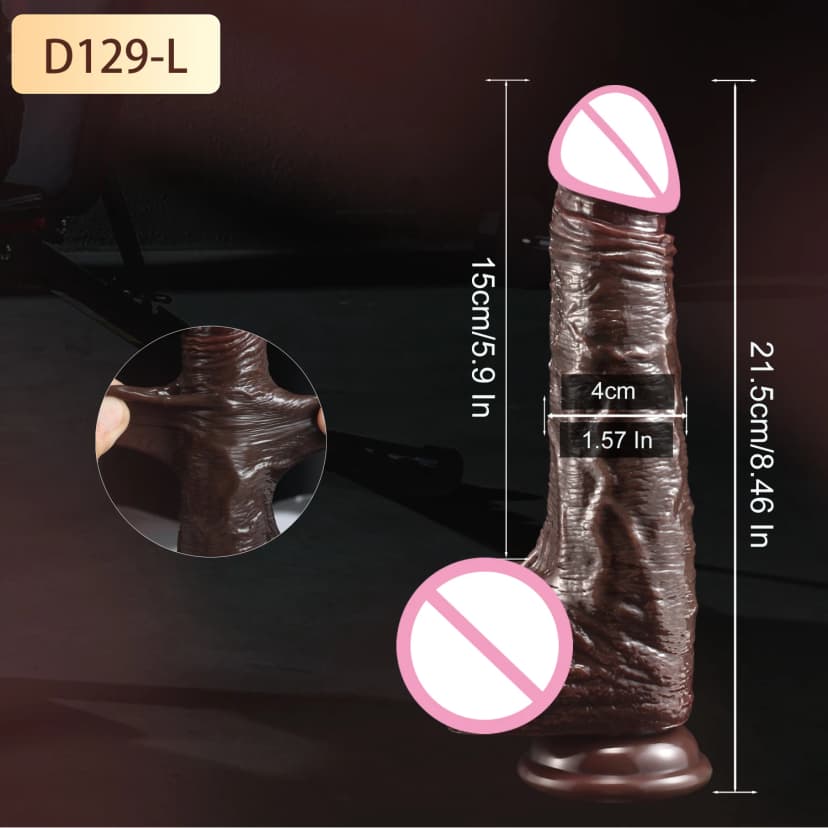
Shape — Anatomical proportion. A defined glans (head), shaft tapering rather than uniform width, base shape that approximates the relevant anatomy rather than abstract suction-cup geometry. Veining is part of shape; some realistic products include it, others don't, and both can be realistic in different ways.
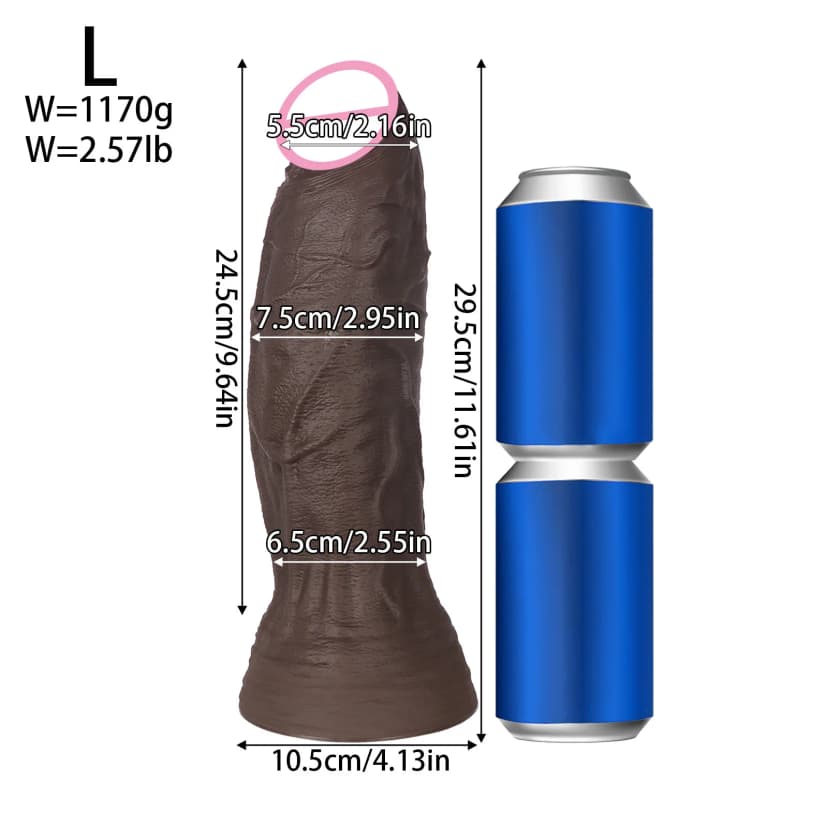
Dimensions — Within human-anatomical range. Insertable length 12–20cm, diameter 3.5–5.5cm. Products outside these ranges can be marketed as realistic but stop being anatomically realistic at the dimensional level.
Colour — Flesh-toned options that approximate skin. Realistic dildos are made in a range of skin tones; the better catalogues offer multiple shades rather than a single "flesh" colour that suits some buyers and looks artificial to others.
A product that meets all four criteria is realistic. A product that meets two or three is realistic-leaning. A product that meets only one — for example, flesh-toned colour on an otherwise abstract shape — is being marketed as realistic without actually being so.
Texture: Dual-Density Silicone
The single most important spec for realistic feel is dual-density construction. Dual density means the product is made with two different silicone formulations: a firmer inner core that provides structure, and a softer outer layer that compresses and gives in a way that approximates the feel of skin and tissue.
The result is a product that's firm enough to be functional but feels genuinely soft to the touch. A single-density silicone product, however well-shaped, has a uniform firmness that doesn't read as realistic in the same way. The difference is immediately apparent on first contact.
Brands that produce dual-density realistic silicone include Vixen Creations (the VixSkin line is the long-standing reference), Tantus (selected products), and various Sinnovator dual-density designs. Dual density is more expensive to manufacture than single density and the price difference is reflected at retail — a dual-density silicone realistic dildo typically costs 40–80% more than a single-density equivalent.
Single-density silicone realistic dildos are still meaningfully realistic in shape and dimension; they're just not as realistic in feel. For a first realistic purchase at a moderate price, single-density silicone is a reasonable starting point. For a primary-use realistic product where the texture matters most, dual-density is the standard recommendation.
Shape: Anatomical Proportion
Realistic shape involves several elements that listings rarely break out separately:
Glans definition — A clearly sculpted head that's distinct from the shaft. The glans is wider than the shaft immediately below it and tapers back into the shaft body. This shape is what gives realistic products their characteristic visual silhouette and contributes to the sensation difference between entry and full insertion.
Shaft tapering — Most realistic products are slightly wider at the midpoint than at the base or just below the glans. The variation is subtle but noticeable in use; a product with completely uniform shaft diameter doesn't feel realistic.
Veining — Surface relief that approximates blood vessels visible on human anatomy. This is partly aesthetic and partly functional; the texture is felt as well as seen. Some realistic products include veining; others omit it for a cleaner aesthetic. Both are valid realistic designs.
Base — The base of a realistic product approximates the relevant anatomy: testicles, a defined pubic region, or a flat flared base for harness compatibility. The base shape contributes to whether the product reads as realistic in the visual sense.
A product that scores well on all four shape elements is anatomically realistic. A product that scores on glans and shaft but has an abstract base is partially realistic — the shaft reads as anatomical but the overall product doesn't.
Dimensions: What Counts as Anatomically Realistic
Human-anatomical range for erect penile dimensions is roughly:
Insertable length — 12 to 18cm covers the majority of the population. 18 to 20cm is at the upper end of the range. Above 20cm insertable, the product extends beyond the anatomical norm regardless of how realistic the shape is.
Diameter — 3.5 to 5cm covers the majority of the population. 5 to 5.5cm is at the upper end. Above 5.5cm diameter, the product is wider than anatomical norm.
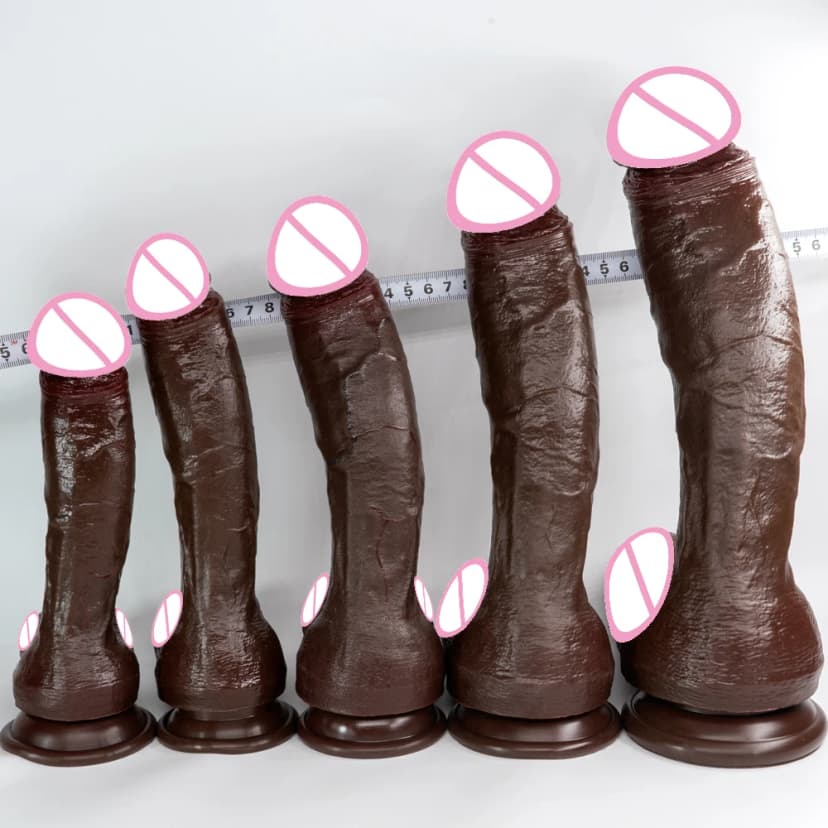
A genuinely realistic dildo sits within these ranges. A product marketed as "realistic" at 25cm insertable and 6cm diameter is realistic in shape and material but not in dimension — it's a realistic-looking large-format dildo, which is a different category of product. There's nothing wrong with that category; it's just worth being clear about which is being purchased.
For a broader view of how dimensions are measured and reported, the dildo size guide covers the full framework.
Material: Silicone vs TPE
Silicone is the standard material recommendation for realistic dildos that you intend to use regularly. Platinum-cured silicone is non-porous, body-safe, can be sterilised, and lasts indefinitely. Realistic silicone designs from reputable brands range from £40 for single-density entry-level products to £150+ for dual-density premium products.
TPE is widely used for realistic-marketed products at lower price points. TPE can be softer than silicone and visually similar — many of the cheapest realistic-looking products are TPE rather than silicone. The trade-offs are well-documented: TPE is porous, can absorb bacteria, degrades over time, shouldn't be shared between people without a barrier, and can leach plasticisers depending on the formulation.
For an occasional-use product at a low price, TPE is a category that exists. For a primary-use realistic product, silicone is worth the price difference. The full breakdown of the trade-offs is in silicone vs TPE: a material safety guide, and the broader question of what "body-safe" means in practice is covered in what 'body-safe' actually means.
Where to Buy Realistic Dildos
SheVibe has the largest realistic silicone catalogue in English-language retail. Their listings include Vixen, Tantus, and various smaller silicone makers. Dimensional data is generally reliable; international shipping is available to many countries.
Sinnovator makes realistic designs in platinum-cured silicone at prices below the premium American makers. Dimensional data is reliable. UK-based, with international shipping.
Tantus sells direct as well as through retailers. Their realistic line is single-density silicone at moderate prices.
Amazon carries a wide range of realistic-marketed products. Material varies — some are silicone, many are TPE, and some are unidentified elastomer. For an Amazon realistic purchase, verify the material in the listing rather than assuming silicone.
What to Look for in a Realistic Listing
The signals that indicate a genuinely realistic product:
- Material identified as platinum-cured silicone (not "medical-grade silicone" with no further detail, not "premium silicone", not "TPR" or "TPE")
- Dual-density mentioned explicitly if you want maximum realistic feel
- Insertable length and diameter within the human-anatomical range (12–20cm × 3.5–5.5cm)
- Detailed photographs showing the shape from multiple angles including glans definition and base
- Multiple skin-tone options in the colour range, indicating the maker has invested in colour-matching rather than offering a single generic flesh tone
You can browse realistic dildos on Measured Pleasure filtered by material, dimension and brand, which is what makes finding a genuinely realistic product across the range of marketing claims actually possible.