guides
How to Introduce Sex Toys to a Partner Who's Nervous
20 October 2025 · 7 min read
The conversation about introducing sex toys to a relationship is one that a large proportion of couples have, and it is handled better with some preparation. Most discomfort around sex toys in relationships comes from a small number of predictable concerns — and most of those concerns are addressable if you understand what they are.
Why Partners Are Sometimes Reluctant
Before trying to persuade or reassure a partner, it helps to understand what their hesitation is actually about. The most common concerns:
Feeling replaced or inadequate. This is the most common source of male partner reluctance in particular. The implicit framing "I want to use a toy" can be heard as "you're not enough." This concern is almost never addressed by facts about the toy — it is addressed by how the conversation is framed.
Unfamiliarity and discomfort. Some people find sex toys inherently unfamiliar and the conversation itself awkward. This is not opposition — it is just the discomfort of a new topic. It typically eases with time and normalisation.
Past experiences or associations. Negative experiences with previous partners, religious or moral associations, or simply having grown up in an environment where sex toys were treated as shameful can create resistance that has nothing to do with the relationship's current state.
Not knowing what it would mean in practice. Abstract conversations about "using toys" are less comfortable than concrete ones about a specific product and context. Uncertainty about what is actually being proposed creates discomfort that specificity removes.
How to Have the Conversation
Choose the timing well. Immediately before, during, or after sex is a bad time for this conversation — it creates pressure and links the conversation to performance. A neutral time — a relaxed evening, a walk, a low-stakes moment — works better. The conversation should not feel like a negotiation.
Frame it as addition, not deficit. The framing "I'm curious about trying this and I thought it might be fun for both of us" reads differently from "I'd enjoy sex more if we used toys" or "I want to try something because what we do isn't enough." The first is an invitation; the second positions the current situation as insufficient.
Be specific about what you have in mind. "I'd like to try sex toys" is vague and allows a partner's imagination to fill in a version that makes them uncomfortable. "I was looking at this external vibrator [show them the product] and thought it might be fun to use together" is specific, low-stakes, and concrete. Specificity removes the imagination gap.
Listen to what their actual concern is. If they are reluctant, the reason matters. "That seems weird to me" and "that feels like it means I'm not good enough" require different responses. Ask.
Accept a no, at least for now. Attempting to override reluctance with persuasion rarely works and tends to make the eventual experience worse. A partner who is unenthusiastic is not a partner you want to have this experience with. If the answer is no today, accept it and revisit later if the topic comes up again naturally.
Starting Points That Work Well
If a partner is willing but uncertain where to start, some product categories are lower-barrier than others:
External vibrators. No insertion involved. The conversation is easier, the sensation is familiar-adjacent, and there is no performance anxiety attached. A simple clitoral vibrator or small wand used on a partner with their input is a low-stakes introduction.
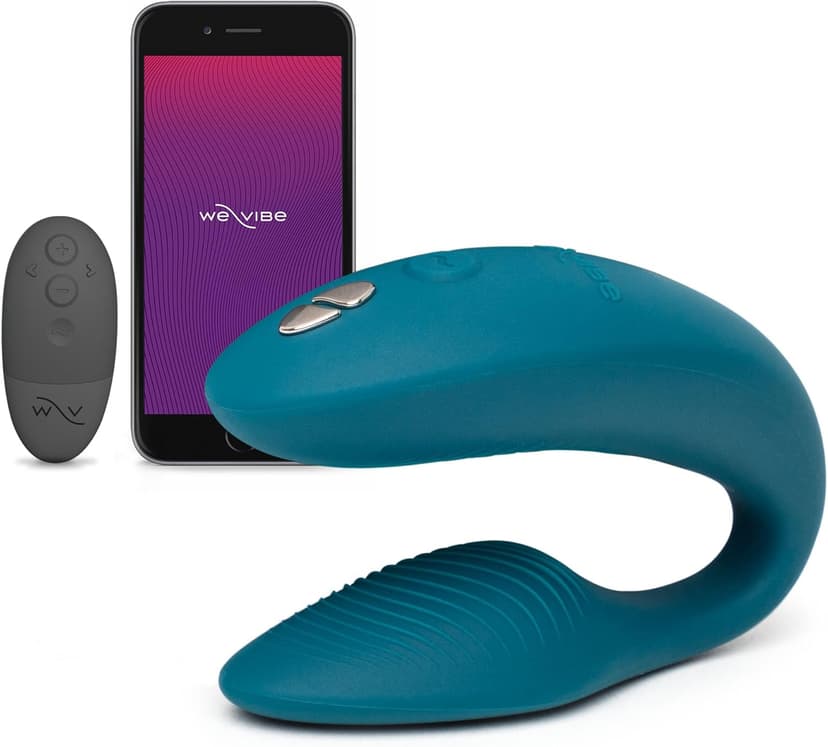
Couples-use toys. We-Vibe-style toys that both partners experience during sex position the toy as something that enhances the activity rather than replacing any element of it. This directly addresses the "replacement" concern.
Lube. Not a toy, but introducing quality lube together is a non-threatening first step that opens a conversation about enhancing the experience. It is often a surprisingly effective bridging product.
The partner chooses. Giving a partner full autonomy over which toy (if any) they want to try removes almost all the resistance. "I'm interested in exploring this — if you want to look at anything and see if there's something you'd be interested in trying, I'd be completely open to that" puts them in control.
After the First Experience
First experiences with toys in partnered sex are often awkward — the mechanics are new, the toy adds a variable, and both people are navigating something unfamiliar together. This is normal and not a signal that it did not work.
Debriefing briefly after — what worked, what did not, what you would try differently — normalises the experience as an ongoing conversation rather than a pass/fail test.
Most couples who try sex toys once continue. The awkwardness of the first attempt is not representative of what the experience becomes with practice.
See also: sex toy gift guide for your partner, sex toys for couples beginners, the best couples vibrators, and sex toy gift guide.